

Guide · January 2025
How AI Reduces Call Volume in a Medical Practice
Medical practices are overwhelmed by results, refills, scheduling, cancellations, insurance questions, referrals, and postop follow-ups. AI cuts this volume by 25–30% almost immediately. Here’s how to deploy it strategically and keep human staff focused on higher-value touchpoints.
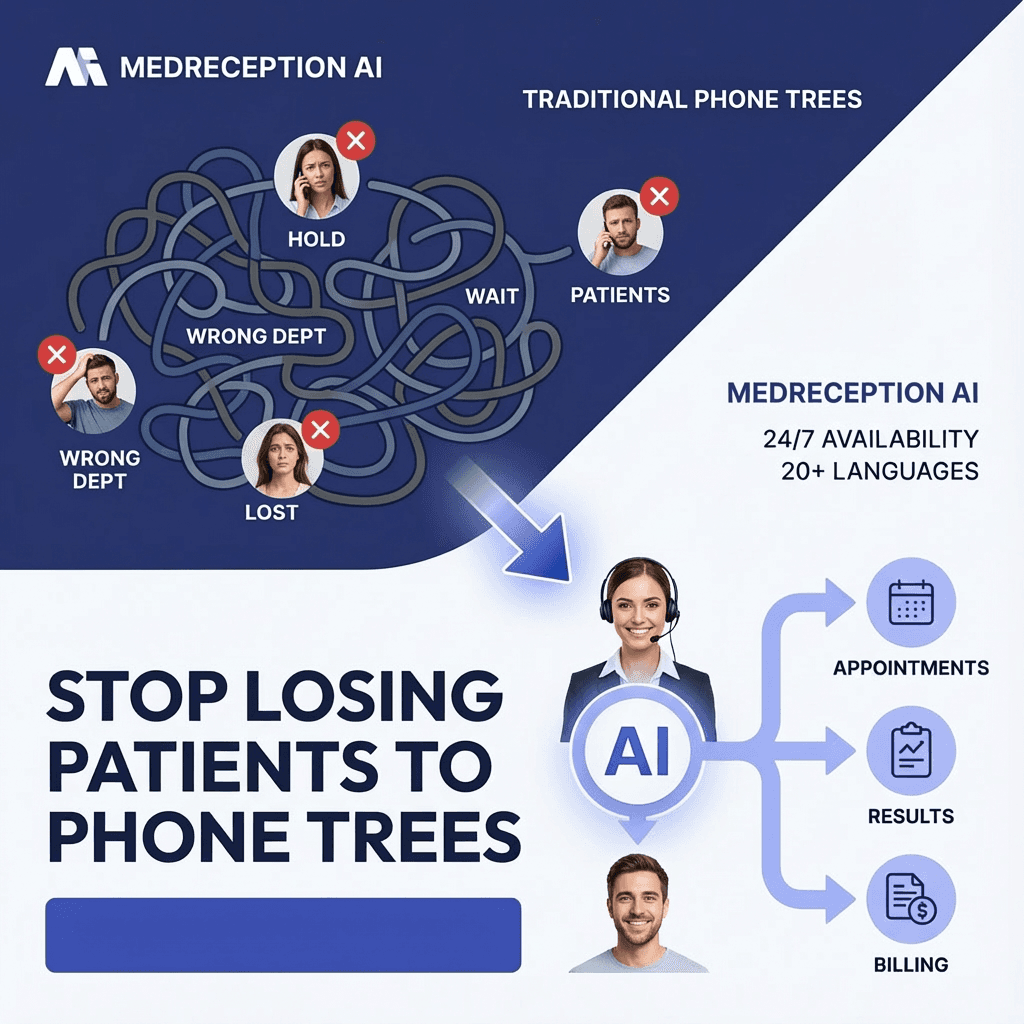
1. AI answers calls instantly
Patients don’t call back repeatedly when they never hit voicemail. AI receptionists provide 24/7 coverage with no hold music, no transfers, and no call-backs
Instant pickup also means fewer abandonments—patients stay on the line because the interaction starts immediately.
2. AI schedules automatically
No more “Call us back to reschedule.” AI connects directly to your EMR or scheduling system, so patients can confirm, reschedule, or book without waiting for staff.
When cancellations are processed in real time, those slots open back up instantly, which prevents follow-up calls from referral partners and patients alike.
Schedule impact
MedReception AI syncs with Athena, eCW, and ModMed, so reschedules and waitlist releases happen in seconds—not overnight.
3. AI handles refills & lab questions
Medication refills and lab requests drive repeat inbound calls. AI collects every detail, validates the patient, and routes structured tickets to the right queue, reducing nurse line load.
Because information is captured with structured fields, clinical teams can resolve tickets faster and avoid 'call-back to clarify' loops.
4. AI is multilingual
Fewer misrouted calls mean fewer repeats. AI detects language instantly, supports 30+ languages, and delivers the message accurately the first time.
Language-detection plus tone analysis ensures urgent requests are escalated regardless of dialect or accent.
Language snapshot
dozens of languages supported today, including Spanish, Portuguese, French Canadian, Mandarin, Vietnamese, and Haitian Creole.
5. AI produces clear summaries
Staff close loops faster when every call arrives with intent, urgency, and next steps. The front desk clears requests faster, so fewer patients need to call back.
Summaries also help physicians and billing teams align on what was promised to patients, removing another reason for follow-up calls.
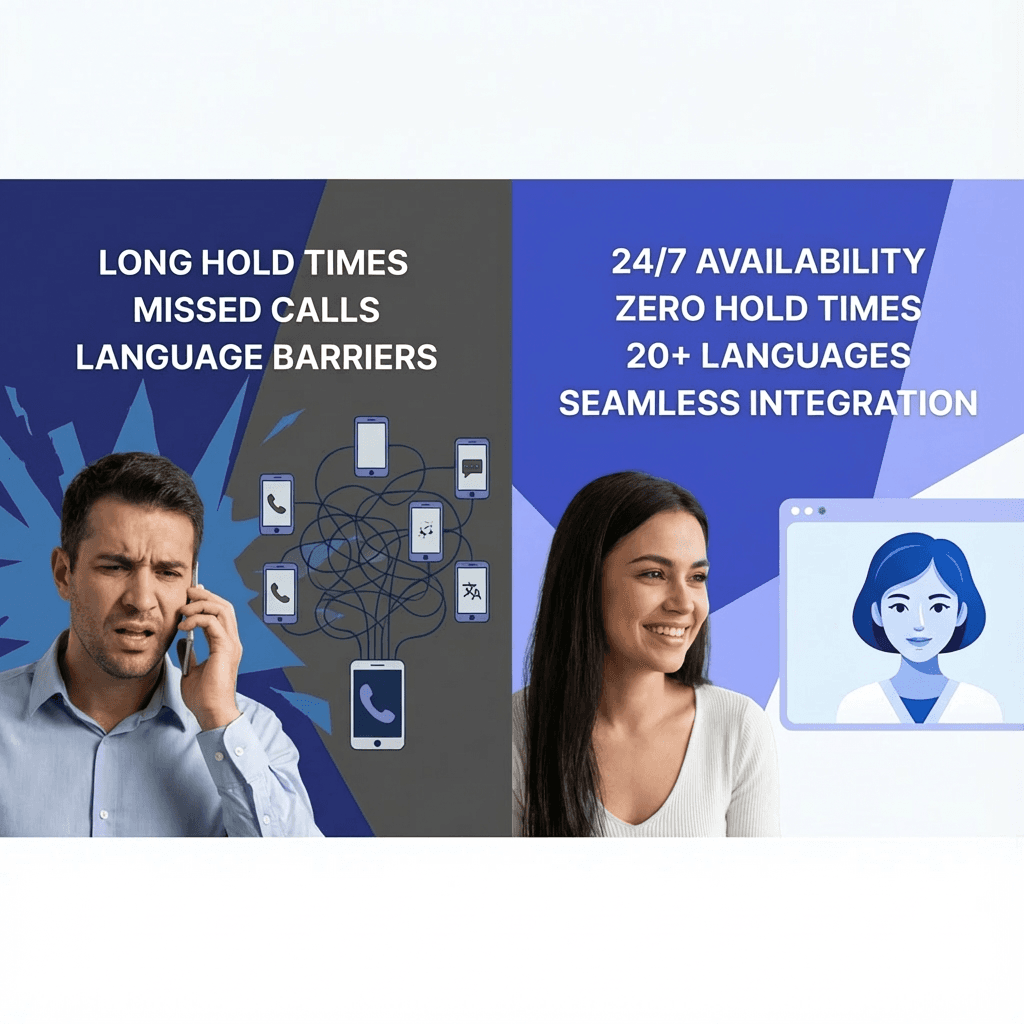
Why this reduces volume
- Eliminates voicemail overflow and missed calls.
- Routes every request correctly the first time.
- Automates repetitive scheduling and status checks.
- Supports patients in their preferred language.
- Hands staff ready-to-close summaries instead of raw voicemails.
Fast results
Practices deploying MedReception AI report a 25–30% drop in live call volume and drastically fewer repeat callers within the first month.
Implementation Checklist
Map every major call type (new patient, referral, results, refill, billing) and note what data staff need to resolve it. Feed those scripts into MedReception AI, connect it to your phone carrier, and decide when escalations should alert humans. The more specific your escalation rules, the faster call volume drops.
Pilot plan
Start with after-hours and overflow daytime calls for two weeks. Once confidence is high, move to full coverage and let staff focus on walk-ins, prior auths, and clinical coordination.
AI doesn’t replace your team—it absorbs repetitive front-desk work so humans can focus on complex cases and in-person care. Ready to see it in action across your scripts?
See How AI Reduces Call Volume