

Cost Guide · 2025
AI vs Human Receptionist: The Real Cost Breakdown
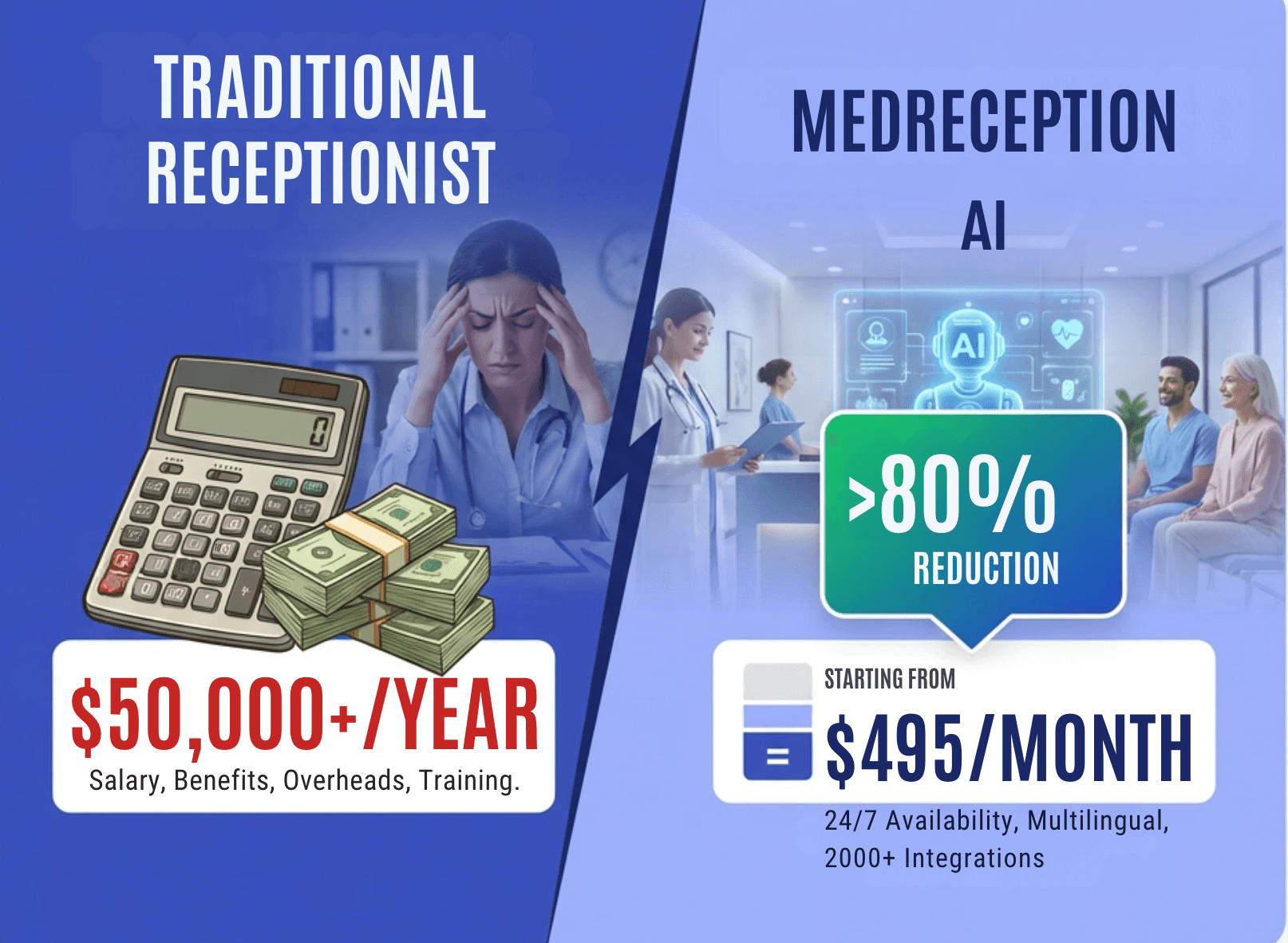
Hiring front-desk staff is expensive: salary, benefits, recruiting, training, and inevitable burnout. Yet many practices only look at hourly wages when evaluating software. This deep dive shows why AI front desks now cover 80–90% of routine calls while humans focus on in-person care.
The True Cost of a Human Front Desk
The national median wage for a medical receptionist is $21/hour. By the time you add payroll taxes, insurance, PTO, overtime for late clinics, and coverage for lunches or call-outs, every seat easily surpasses $70,000 annually. Multiply that by the 2–3 people required to cover 11–12 hours of phones and you’re well into six figures.
Those dollars also fund recruiting campaigns, onboarding managers, and endless retraining cycles when staff churn. Most clinics repeat this investment every 15 months because front-desk roles have one of the highest turnover rates in healthcare.
- • $38,000–$55,000 salary band in most metro areas
- • Additional 20–30% for benefits, payroll taxes, and PTO
- • Turnover replacements every 12–18 months
- • Coverage gaps whenever staff are sick, at lunch, or after hours
Quick math
A clinic averaging 1,100 phone minutes per month spends under $14,000 per year on MedReception AI—less than a quarter of one human FTE.
How AI Pricing Works
MedReception AI charges per minute, so you pay only for the conversations that happen. There are no ramp fees, minimums, or overtime surcharges. Because the AI can answer multiple calls simultaneously, you never need to “staff up” for Mondays or flu-season surges. Usage reports break down minutes by workflow (scheduling, refills, after-hours) so you can allocate cost centers or bill back to satellite offices.
- • $0.99 per minute of talk time
- • No benefits, overtime, or minimum-hour guarantees
- • Unlimited simultaneous callers, even during spikes
- • Works 24/7/365 with the same script and QA controls
Predictable billing
Finance teams love the consistency: spend scales with actual patient demand, not seat counts or overtime.
Hidden Costs Humans Can’t Escape
Recruiting takes 30–45 days and often requires agencies or signing bonuses. Training a new receptionist consumes 40+ hours before they are competent—yet most turn over within 15 months. Each resignation restarts the cycle and often coincides with patient complaints about unanswered phones. AI deploys in a week and never requests PTO.
Human coverage also degrades after 5 p.m. or on weekends, which leads to voicemail pileups and Monday chaos. Practices then pay answering services or on-call stipends—another $1,500–$3,000 per month that rarely delivers great patient experience.
Scenario Comparison
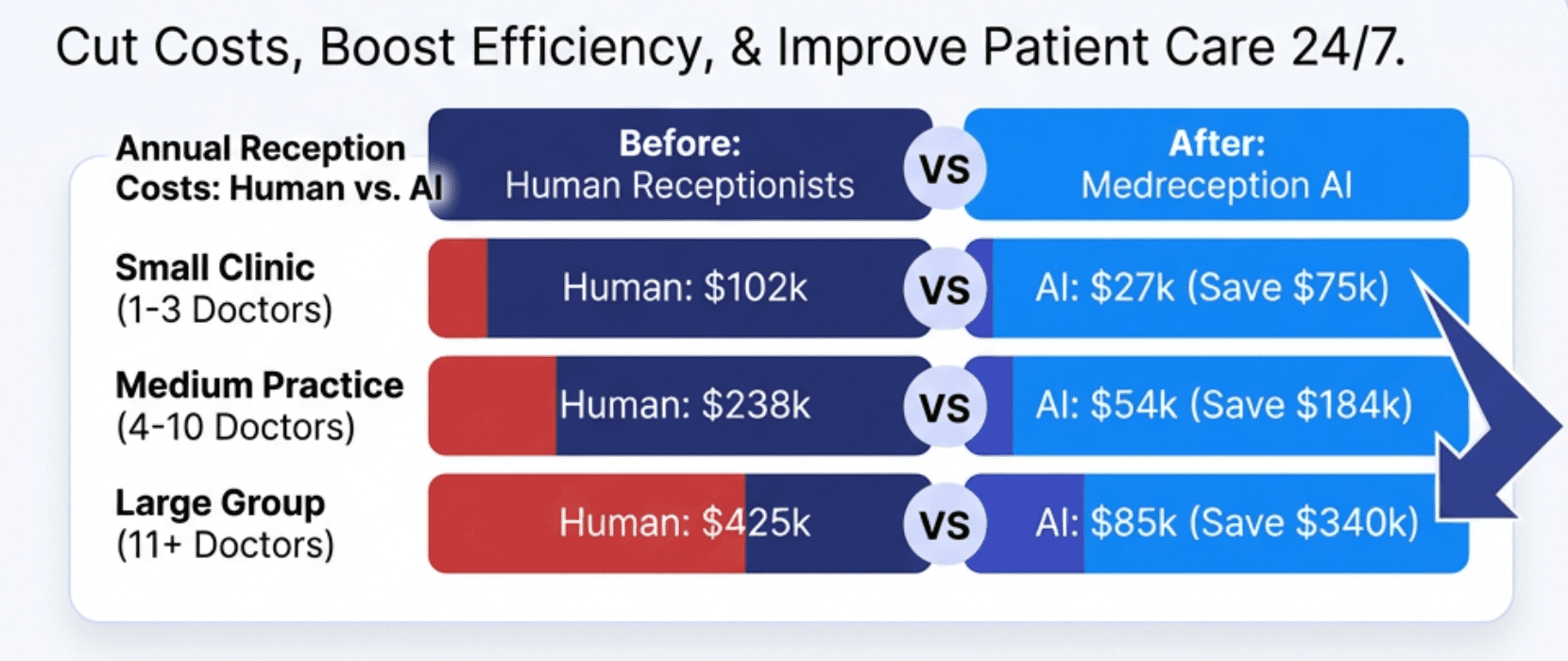
Single-location primary care
Human: $52,000 salary + $13,000 benefits + $6,000 coverage overtime = $71,000
AI: ~$1,150/mo (1,150 minutes) = $13,800/year
Multi-specialty clinic with evening hours
Human: Needs 2.5 FTEs for coverage ≈ $155,000 fully loaded
AI: ~$2,800/mo (2,800 minutes) = $33,600/year
After-hours nurse triage partner
Human: Answering service averages $1.80/call + on-call stipends ≈ $40,000/yr
AI: $0.99/min with smart escalation ≈ $18,000/yr
ROI snapshot
Most practices see payback in 45–60 days because the AI immediately absorbs after-hours, overflow, and multilingual calls.
Where Humans Still Excel
Clinics that win with AI keep humans for bedside moments—greeting families walking in, managing surgical consents, consoling anxious callers. The AI performs repetitive intake and triage, then hands warm transfers with complete context. Think of it as a digital teammate that never sleeps, not a replacement for empathetic staff.
Hybrid playbook
Let AI field every inbound call, route nuanced cases to humans with summaries, and audit a handful weekly for quality.
Ready to model your savings?
We’ll plug your call volume into a cost calculator, show you real transcripts, and outline how MedReception AI coexists with your current team.
See AI in Action